
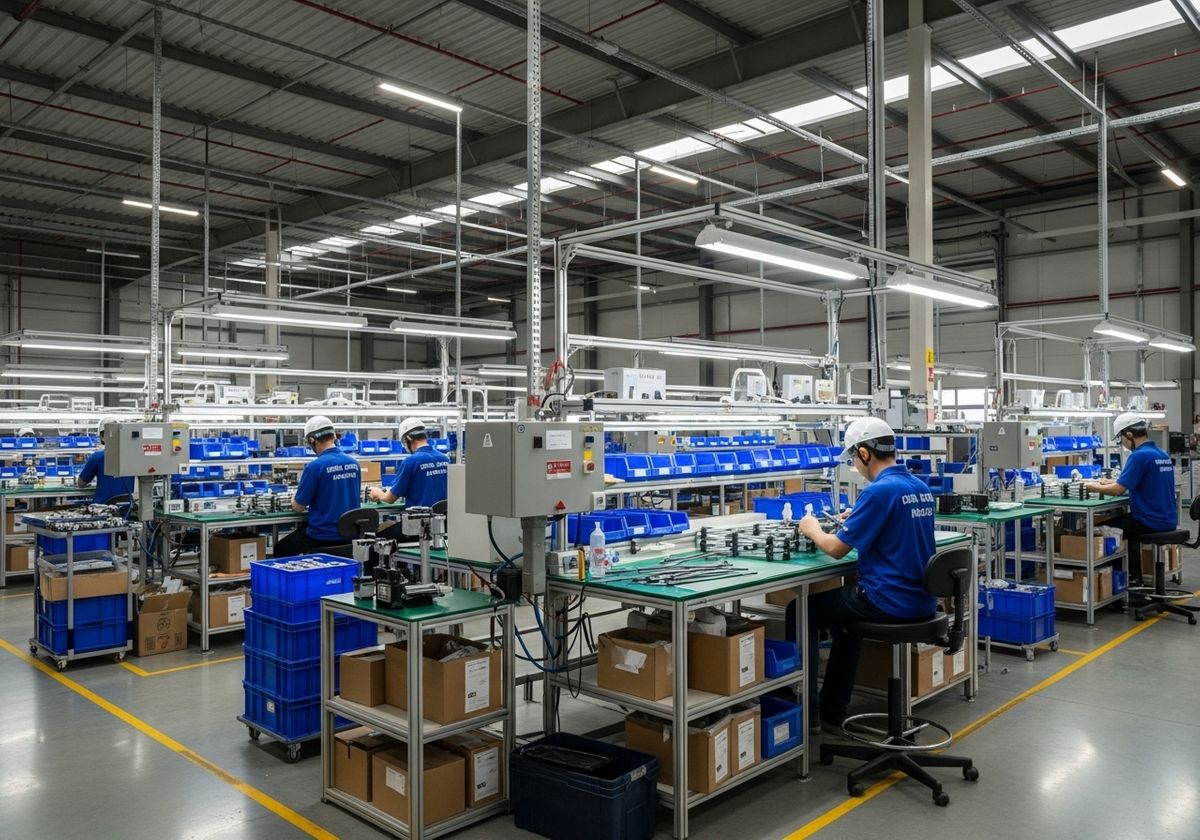
In today's economy, businesses are constantly seeking ways to reduce operating costs and improve their bottom line. One area that offers significant potential for savings is lighting, particularly in industrial settings. By identifying and implementing high-efficiency industrial LED lighting solutions, businesses can achieve substantial energy savings and improve their overall profitability.
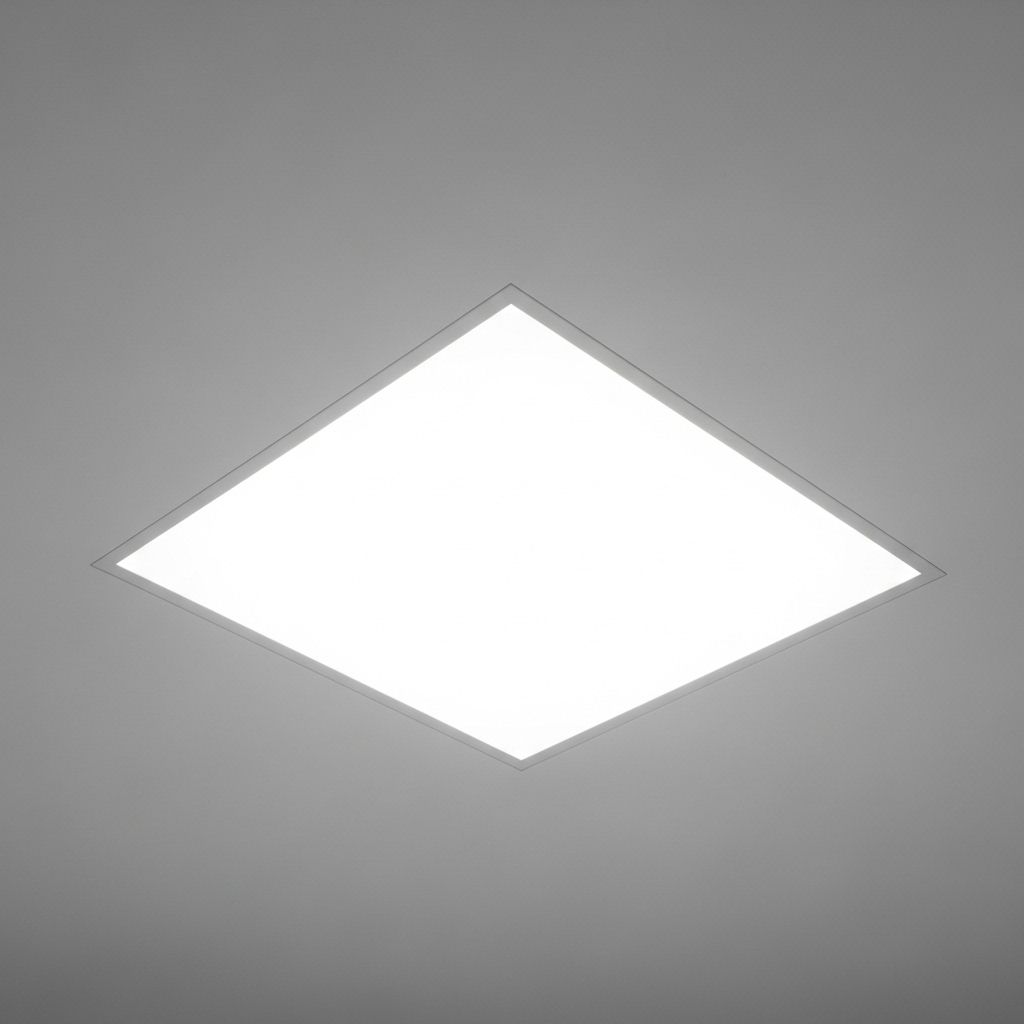
Understanding LED Lighting Efficiency
When evaluating LED lighting solutions, it's essential to understand the key metrics that determine their efficiency. Lumens per watt (LPW) is a crucial indicator, representing the amount of light produced for each unit of energy consumed. Higher LPW values indicate greater energy efficiency. Correlated Color Temperature (CCT) affects the perceived color of light, while Color Rendering Index (CRI) measures how accurately colors are rendered under the light source. Selecting the appropriate CCT and CRI for the specific application is crucial for visual comfort and task performance.
Benefits of High-Efficiency Industrial LED Lighting
Switching to high-efficiency industrial LED lighting offers numerous advantages. First and foremost, it leads to significant business energy savings. LED lights consume a fraction of the energy compared to traditional lighting technologies like incandescent or fluorescent lamps. This reduction in energy consumption translates directly into lower electricity bills, resulting in substantial cost savings over time.
In addition to energy savings, LED lighting has a much longer lifespan than traditional lighting. This reduces the frequency of replacements, saving on maintenance costs and minimizing disruptions to operations. High-quality LED fixtures are designed to withstand harsh industrial environments, providing reliable performance and reducing the need for frequent repairs or replacements.

Identifying High-Efficiency LED Lighting Solutions
Identifying high-efficiency industrial LED lighting solutions requires careful evaluation and consideration of several factors. Conduct a thorough assessment of your current lighting system. Identify areas where energy consumption is high and lighting quality is poor. Look for lighting fixtures with high LPW values to maximize energy savings. Ensure that the selected LED lighting solutions meet the specific requirements of your industrial environment. Consider factors such as ambient temperature, humidity, and exposure to dust or chemicals. Work with reputable lighting suppliers who can provide expert guidance and support to find the right LED lighting solutions for your needs.
Maximizing Savings with LED Lighting
To maximize savings with LED lighting, consider implementing lighting control systems. These systems allow you to dim or turn off lights in areas that are not in use, further reducing energy consumption. Take advantage of utility rebates and incentives to offset the initial cost of upgrading to LED lighting. Many utility companies offer financial incentives to businesses that invest in energy-efficient technologies. Establish a proactive maintenance plan to ensure that your LED lighting system operates at peak efficiency. Regularly clean fixtures and replace any damaged components to maintain optimal performance.
Switching to high-efficiency industrial LED lighting is a smart investment that can lead to significant business energy savings and improved profitability. The LED WAY is passionate about helping businesses like yours find the perfect LED lighting solutions to maximize savings and efficiency. Contact us today!